You open your ads on a Tuesday morning. Over the last 24 hours, Meta looks cheap. Over the last 30 days, Google Ads does. Which one do you believe?
Both. They answer different questions, and the trouble starts when you use one window to answer another window's question.
24 hours: is something broken?
The last day is too short to judge a platform. A couple of calls either way swing the numbers, and a job booked today may have started with a lead from last week.
What a day is good for is spotting things that stopped or spiked while there is still time to act:
- a campaign that stopped running after a billing problem or a rejected ad
- spend that jumped after someone changed a bid
- a run of missed calls on a busy morning
Look at the last 24 hours to check your ads are doing what you expect. Don't move money on it.
7 days: what is working this week?
A week evens out the rhythm of the days. Most local businesses hear from different people on a Monday than on a Saturday, and a week covers each day once.
Seven days is the window for everyday decisions: which platform is booking for less, which campaign has gone quiet, whether the change you made last Monday helped. It is long enough to smooth out one odd day and short enough to catch a change before it costs you a month.
30 days: what is the trend?
A month shows the shape of your season. A roofer in spring, an HVAC company in the first cold week, a landscaper in May: demand moves, and so does what a job costs.
Thirty days is also where smaller budgets start to say something. Spend $20 a day on a platform and a week may bring only a handful of leads, not enough to judge. A month gives it room.
Use 30 days for the bigger calls: whether a platform earns its place at all, whether to raise or lower your total budget, how this month compares with last.
A spike shows up in a day, a trend takes a week, and a slow season needs a month.
When the windows disagree
Back to Tuesday. Meta looks cheaper over 24 hours, Google Ads over 30 days. That points to one of three things.
- Noise. Meta had a good day. Check the 7-day view. If Google Ads still leads there, nothing has changed.
- An early shift. Meta has been improving for a week or so. The 7-day view leans toward Meta too, and the 30-day view follows if it lasts.
- A turning season. Demand moved and one platform caught it first. Compare with the same month last year if you have it.
The working rule: act on the 7-day view, confirm with the 30-day view, and use the 24-hour view to check nothing is broken.
Enough evidence in every window
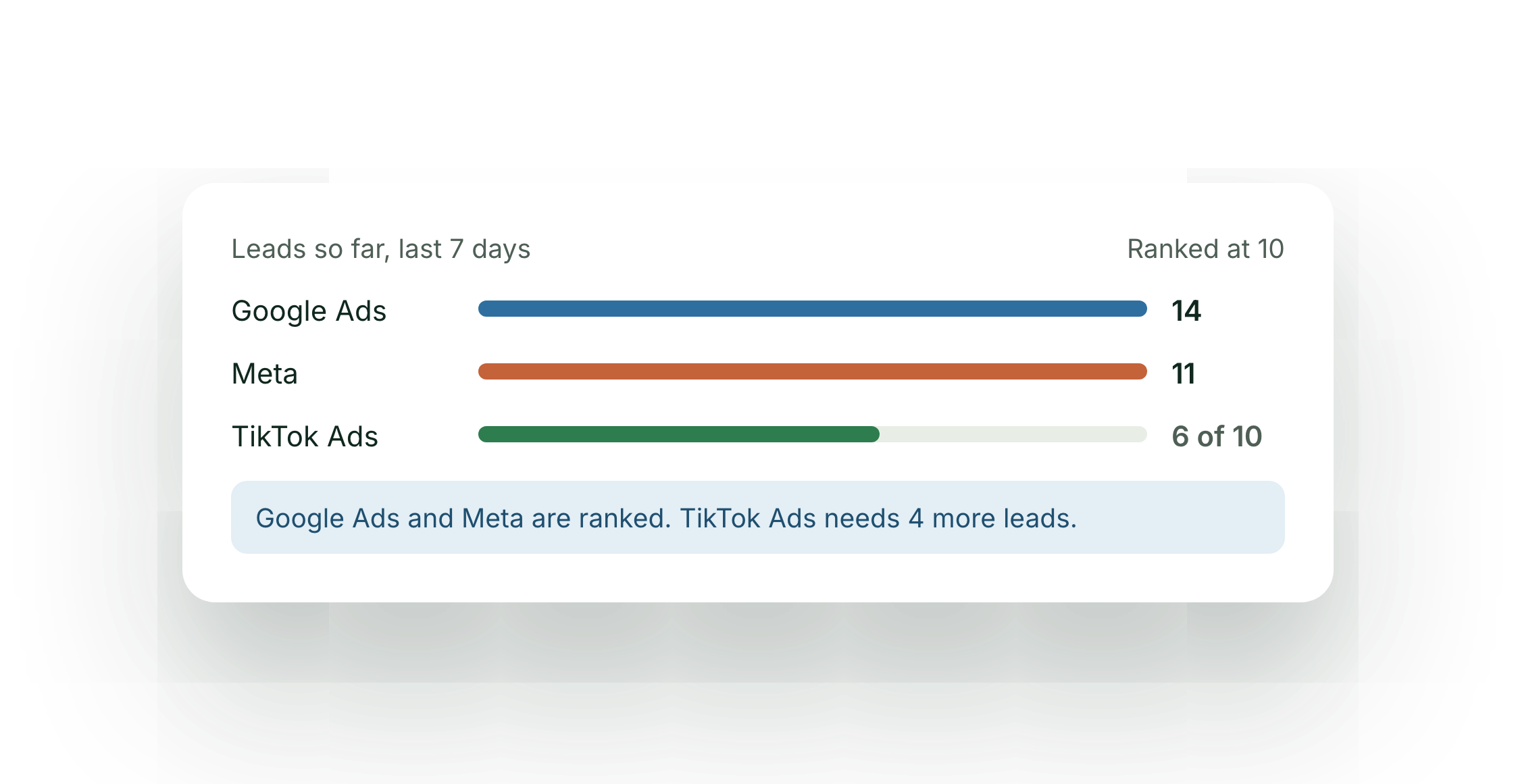
A window only helps if it holds enough leads to judge. Dira ranks a platform once it has 10 leads in the window you're looking at, and names a winner once two platforms qualify. A platform can be ranked over 30 days and still be gathering evidence over the last 24 hours, and the screen says so instead of showing a number that means nothing.
The same goes for booked jobs. In the Northgate Plumbing and Drain sample, over 90 days, Google Ads booked 65 jobs at $131 a job and Meta booked 50 at $206. TikTok Ads booked 5, too few to price a job. The first two are worth comparing. TikTok Ads needs more time before its number means anything.
What Dira shows
Dira has a 24h, 7d and 30d switch at the top of the screen, and every number follows it: spend, leads, booked jobs, cost per booked job and, with two or more platforms, the ranking. While fresh numbers are on their way, an Updating mark sits beside the switch and the last numbers stay in place.
A strip on Overview shows which platform was ahead on each of the last 14 days, and marks the days with too few leads to call. That is the quickest way to tell a one-day blip from a real change: if Google Ads led on 9 of the last 14 days and Meta took the last two, you are watching a possible shift, not a new winner.
You don't have to check every morning
The windows are there when you want to look. When you don't, the Monday report covers the week: booked jobs from your ads, what you spent, what a job cost and which platform was the best value. Between Mondays, Dira sends an alert when a campaign stops booking or a different platform starts winning, so the 24-hour view comes to you when it matters.