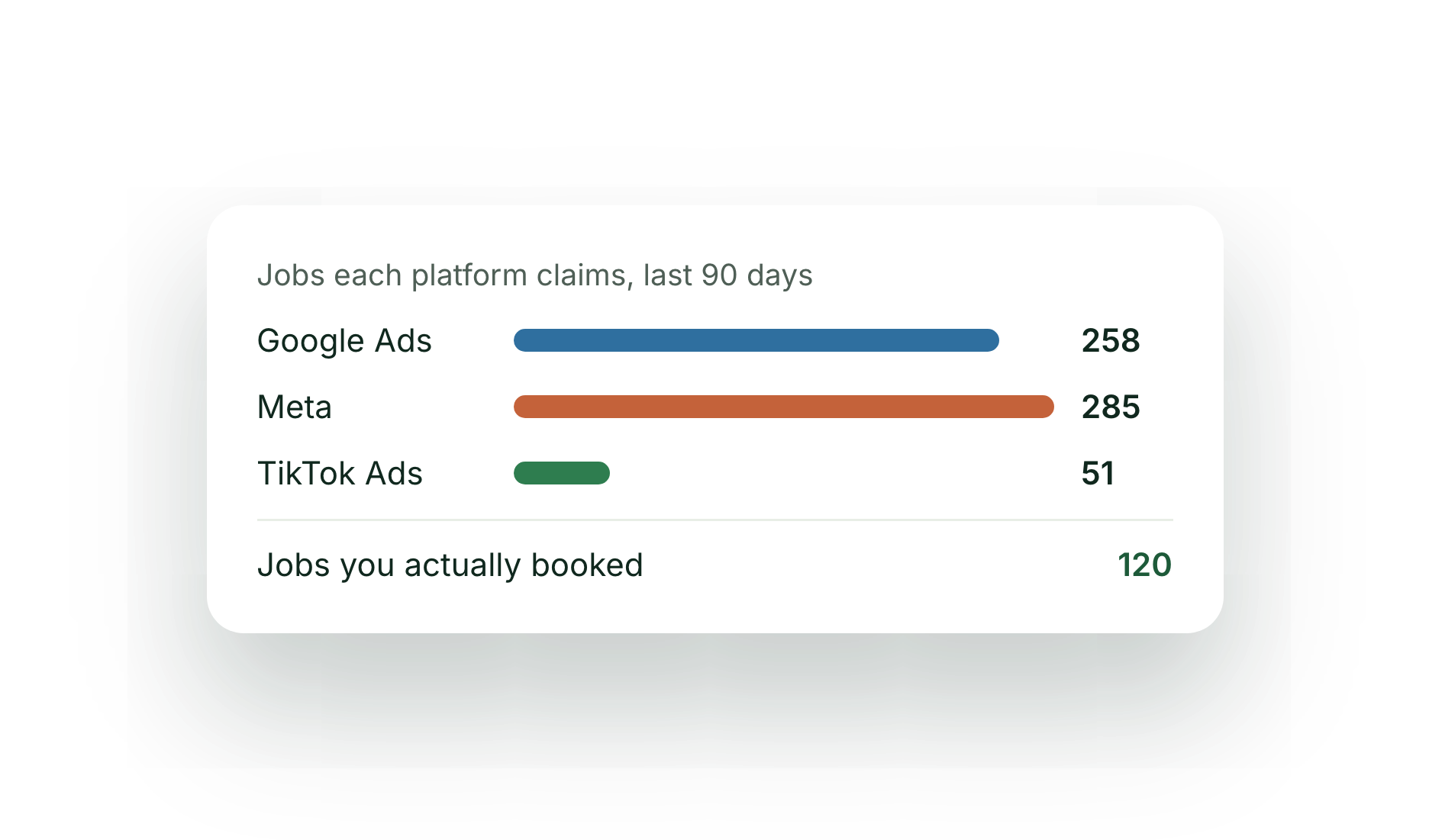
Ask a plumber what a lead is and you'll hear "someone with a job for us." Ask a dental office manager and it's "a new patient in the chair." Ask someone running an online store and it's "an order that doesn't come back."
Ask the ad platform and the answer is whatever the account was set up to count. Often that includes a page view, a tap on the phone number, or a form sent by someone who will never pay you.
Why clicks treat every business the same
A click is the same thing everywhere. It costs money, and it tells you someone was curious. That's all it tells you.
Ranking platforms by cost per click, or even by cost per lead, assumes every lead is worth the same and turns into paid work at the same rate. They don't. A platform that sends cheap clicks can send expensive customers, and one that looks pricey per click can fill your schedule.
What you want to compare is the cost of the thing that pays you. That thing changes with the business.
A plumber: the booked job
For a plumbing company, the result is a job on the schedule. A lead can be a form, a call or an online booking, and it counts once it becomes a job in your booking tool.
Calls matter most here. Take a sample of 212 calls from ads over 90 days for Northgate Plumbing and Drain:
- 64 booked a job.
- 71 talked, with no job.
- 38 hung up in under 30 seconds.
- 39 were missed.
All 212 can show up as leads in an ad dashboard. 64 of them were work. A short call is often a wrong number or someone shopping on price. A missed call is often a job that went to the next plumber on the list.
A clinic: the new patient
For a dental, physio or chiropractic clinic, the result is a new patient who books and shows up. An existing patient who clicks an ad to find your phone number isn't new business, and a form from someone asking whether you take their insurance isn't an appointment.
So a clinic counts new patient appointments, matched to the enquiry that started them. For example, a Meta lead form for a cleaning and exam on Monday, followed by a new patient visit booked in Jane on Thursday under the same name, phone and email, counts as one new patient for Meta.
An online store: the first order
For a small online store, a lead is rarely a form. It's an order, and not every order is equal. A returning customer who clicked an ad on the way to buying anyway didn't need the ad, and an order refunded next week isn't revenue.
So a store counts first orders from new customers, taken from Shopify or wherever its orders live. For example, a TikTok ad click on Friday night followed by an order that ships on Saturday counts as one first order for TikTok Ads.
A booked job, an appointment and an order are different things. Compare platforms on the one that pays you.
A firm: the consultation, then the client
Law, accounting and consulting firms sit in between. An enquiry becomes a consultation, and a consultation may become a signed client weeks later. Count the consultation first, then the signed client, so you can see which ads bring conversations and which bring paying work. For example, a LinkedIn lead form about year-end accounts that becomes a booked consultation in HubSpot two days later counts as one consultation for LinkedIn Ads.
What to do with your own accounts
Start by looking at what your ad accounts count today. In Google Ads, LinkedIn Ads, Meta, Microsoft Ads or TikTok Ads, open the list of conversion actions and ask one question of each: does this mean someone is likely to pay me?
- Keep: quote requests, calls of a real length, online bookings, first orders.
- Drop: page views, newsletter sign-ups, map clicks, calls under 30 seconds.
Then decide what the paid result is in your own records: a job, a patient, a client or an order. That is the number to divide your spend by. Everything else is a step on the way.
How Dira counts it
In Dira you choose what counts as a lead for your business. Turn on calls over 60 seconds from Google Ads and quote request forms from Meta, for example, and leave newsletter sign-ups and page views off. Recommendations count only what you've turned on.
Dira then matches each lead to the booking it became, using your records: Jobber for a plumber, Jane for a clinic, HubSpot for a firm, Shopify for a store. No booking tool? Upload a file of your jobs. Your Ad Report is written in your terms: cost per booked job, cost per new patient, cost per consultation or cost per first order.
Those results go back to each platform too, so it learns what a good lead looks like for your business and bids for more like it. And when you run a second platform, Dira ranks them on that same number, not on clicks.